Can a blower repair solve a cold addition?
Only if a confirmed blower fault explains the problem. First establish whether the room is connected to that system and whether the complaint is weak airflow, missing heat or a different comfort issue.
Record the symptom
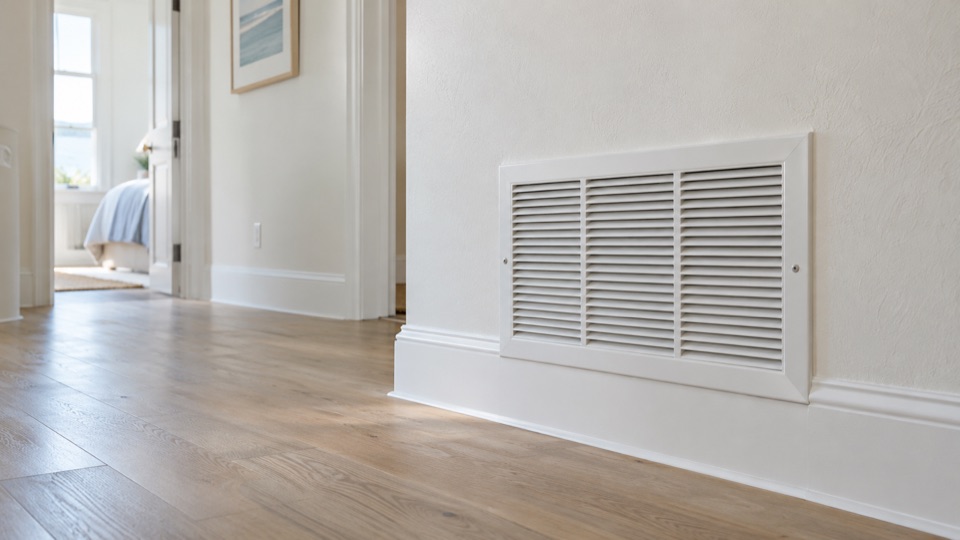
Describe the room’s use, the visible grilles and whether a separate unit or thermostat is present. Compare the timing with nearby rooms already served by the house system. Do not assume a grille is connected because it is present.
Say whether the room has always been hard to heat or became cold suddenly. Mention recent work or furniture now covering a grille. Stay in the room to make these notes; do not crawl above or below it.
Plan the access
Existing drawings or renovation records may show the intended air path. If a later ceiling conceals it, ask how the planned investigation will locate the issue before finishes are opened. Give the actual White City or Indian River Estates service address.
For work that alters ducts or the room itself, name the applicable building office. The county’s after-the-fact guidance applies to uncertain earlier approvals and should not be confused with a standard motor-repair scope.
Define the repair decision
Ask for the evidence connecting a recommended blower change to this room. If the fault is in a branch duct or the room is served separately, the remedy needs to address that finding instead.
A new duct opening, changed return path or larger heating section changes the job. Ask why it is needed, how the work area will be reached and who will restore the finish. Do not approve demolition merely to see whether the room gets warmer.
Questions about this repair
Does a grille prove a room is on the central system?
No. The air path and system serving the room need to be established. A visible grille alone does not show a working connection.
Carrier heating guidanceU.S. Department of EnergySt. Lucie CountySt. Lucie County